
Mundus Imaginalis
Courting the imaginal

I am walking down the winding village road, surrounded by pine trees, as the chill settles in the air. The sun is about to set and the magic hour is upon us. The forest is alive with all kinds of sounds reserved for the evening and the creatures of the dusk. It is both thrilling to walk at the edge of the human village and the wild, and somewhat medicinal. I want to linger longer, yet the warmth of my home is calling me back.
Suddenly I find myself in the middle of a conversation between two blackbirds and I stop in my tracks, pronto. I am soulfully obliged to stop and listen to the unfolding exchange. I have no idea what they are discussing but it is so alive and so genuinely conversational. I close my eyes and their warm, fluid voices enter my body like honey flowing through my throat:
As I bask in this heavenly sound, I feel life force filling me up. Their distant relatives—beloved nightingales—will soon start singing into the wee hours of the night, courting their potential mates. Every spring I wait eagerly for their return, to hear them sing of their adventures in far away lands …
Birdsong is said to regulate our nervous system by subconsciously assuring us of safety in our surroundings. Yet there's certainly more to this experience than a simple scientific explanation; life is more complex and poetic than that. The exuberant chatter of blackbirds is a sweet reminder that everything is alive and how beauty repairs—instantaneously—both body and psyche. The song of the earth brings our neglected, orphaned parts back to life by drawing back the curtain of the imaginal.
There are many pathways to the imaginal realm—mundus imaginalis1. Nightingales, for instance, captured the imagination of Persian poets for centuries and appeared in mystical, devotional poetry that still inspires us today. Their songs were so phenomenal that they became a symbol of the yearning for divine love.
Scholars like Henry Corbin alert us that imaginal is not imaginary. The faculty of imagination bestowed upon the human being might be the most prolific and significant organ, necessary for our survival through transitional periods such as the one we find ourselves in. When tectonic shifts take place and shake the foundations of our consensus reality2, it means that the worldviews, belief systems and values which shaped that reality into being, are disintegrating. And when the fabric of normalcy is torn so jarringly, it takes real maturity, strong body-psyche container and an unwavering trust in the mystery to hold the tension and paradox surrounding us.
This is the time when we are in desperate need of new language—new images and metaphors.
I trace the wisdom of the imaginal realm to the 12th and 13th centuries—an era that produced some of the most influential Islamic scholars and spiritual thinkers in history. The 13th century was also when Persian mystical poetry reached its height of sophistication—the language had become a living container for spiritual expression and philosophical inquiry.
You know, I always wondered: Why was there such a remarkable concentration of spiritual wisdom emerging in one region of the world, in such a narrow window of time?
A little research revealed something very curious: the13th century was particularly a time of unrest, chaos, and conflict in that part of the world. Anatolia, Persia and the Middle East were caught in the crossfire of crusades from the west and Mongolian invasions from the east. Tectonic plates were shifting. I believe that's why so much poetry, music, and other devotional practices emerged—and why language itself evolved to contain the birth of new possibilities, visions, and realities. When violence and the loss of everything we hold dear feel imminent—when the unknown is so palpable—we instinctively turn towards the eternal. We take refuge in the parts of ourselves that cannot be touched by gross extraction of warfare.
Approximately 700 years later we are witnessing another surge of conflict over geopolitical and economic power in the Middle East. It seems like the ghosts of empires are still fighting over the same old story; the old-boy-men club is still calling the shots. An overwhelming wave of frustration and disillusionment washes over me at times, wondering, have we learned absolutely nothing all this time?
But then, the song of the blackbird brings me back to my senses, literally. Poetry stitches my scattered pieces into coherence—a presence that allows me to rest in paradox, in that field beyond right and wrong, as the Persian mystic Rumi said.
My listening leads me to this incredibly powerful essay called “The River Beneath the Noise” written by my Iranian friend Kamyar Houbakht, which touches on the essence of Iran:
“So what is this river we keep referring to? It is not just a metaphor for history. It is the deeper current of meaning and memory that flows through Iranian culture—our poetry, our philosophy, and our spiritual traditions that have survived every political collapse and many social changes. It is the soul layer of our reality, the lived intelligence that allows a society to move through upheaval without losing its sense of direction. And it is not simply something we look back upon; it is something we can still draw from, right now, if we remember how.”
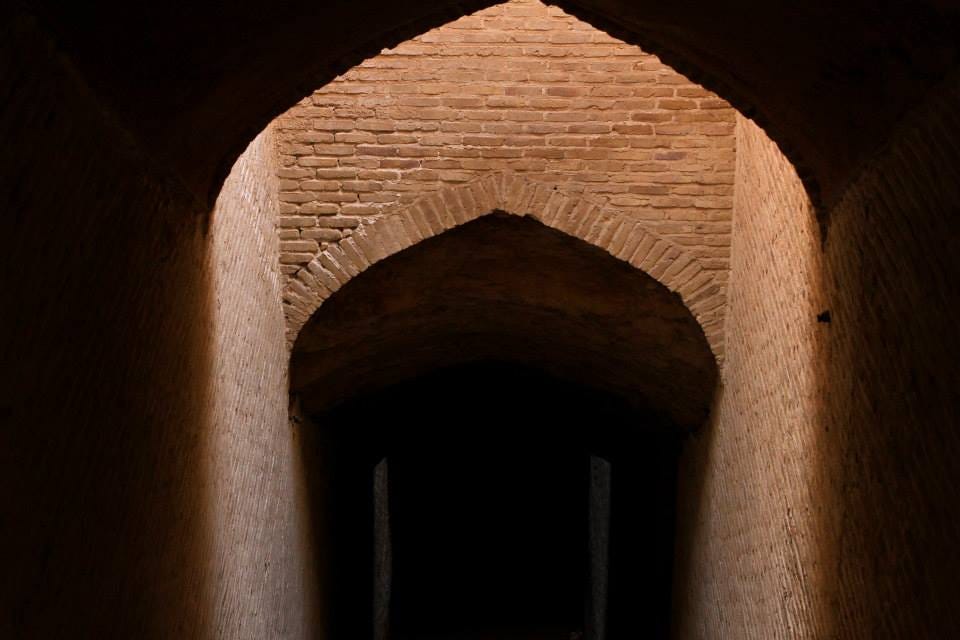
Yes, beneath the noise of an authoritarian regime, ravaging missiles, and smoke plumes lies a river, clear and serene; I sensed it when I was in Iran. The river is a healing image I can hold onto. In the age of ungodly forms of technology, we are constantly bombarded with the images of brutal violence, which threatens not only our sanity but also our capacity to imagine, and thus create other realities.
We need images like “the river beneath the noise” that can anchor and help us remember the deeper and older stories about our lands, ancestors, and cultures. We need poetry to remind us of the timeless threads of the human experience. We need to pay attention to the metaphors our dreams are presenting us; they hold the key to unlock the mysteries of our mythopoetic lives, which are not separate from the life of all our kin whether two-legged, four-legged, winged or finned.
Can you imagine what would happen if were to recite poetry or share our dreams with one another in courtrooms, government offices, or the UN Security Council instead of shouting at each other and killing each other’s children? As naive as it sounds in the current climate, I am going to hold on to that vision.
As the rough corners and rigid edges of the outer reality crumble, what images are we holding in our attention? Are we tracking the metaphors that are guiding us towards wholeness? Are we patient enough to participate in the painstakingly slow process of building a culture of peace? Do we allow our inner artist to adventure in mundus imaginalis to bring forth new forms of life?
When the shell of a paradigm shatters, a new reality wants to be born.
From the cracks, a wild poetic language bursts forth, and a new consciousness springs from the depths.
The blackbirds are singing, and soon the nightingales.
It is not a call to arms; it is a call to sacred arts.
War in her mouth
By Haleh Liza Gafori3
War in the living room. Every Friday,
my mother painted it.
Every Friday – her day off, for a year –
another piece of the looming billboard of her canvas
became body, boot, fire,
bare feet of a running girl,
flexed arm of a running soldier,
silver sheen on his rifle’s black barrel,
soft folds in her cotton dress,
a tree in flames and sunlit dust,
arches, domes, olive fatigues,
bombed bridge broken sky Middle East.
We were in New Jersey,
and the barefoot girl was on our coffee table,
running across a page in a magazine,
through my mother’s body, out her mind –
onto the canvas,
her skin, our skin.
Our ancestors, born in the mountains of Khorasan, Iran,
strolled through orchards in Baghdad,
recited in Damascus,
tended the fires in Yazd,
touched the Black Stone, said
The meadow is my prayer rug.
Cypress trees, my minarets,
and the wind, my call to prayer.
One Friday, my mother needed a model.
To render the surreal real or real surreal,
my mother needed to study the protruding clavicle
of a running girl.
I froze for her
mid-run.
In her palette of grief and rage,
love was the obscured and persistent undertone.
Friday after Friday,
the girl took shape and the soldier,
chasing her, me --
my clavicle, her clavicle,
my flesh, her flesh.

French philosopher, theologian, Iranologist, and a professor of Islamic studies, Henry Corbin explains mundus imaginalis as follows: “Between the empirical world and the world of abstract understanding is placed an intermediate world, which our authors [Suhrawardi, Ibn Arabi, Avicenna (Ibn Sina) and other Islamic philosophers who cultivated the understanding of mundus imaginalis] designate as alam al-mithal, the world of the Image, mundus imaginalis: a world as ontologically real as the world of the senses and the world of the intellect, a world that requires a faculty of perception belonging to it, a faculty that is a cognitive function, a noetic value, as fully real as the faculties of sensory perception or intellectual intuition. This faculty is the imaginative power, the one we must avoid confusing with the imagination that modern man identifies with ‘fantasy’ and that, according to him, produces only the ‘imaginary.’”
He adds: “It is neither the senses nor the faculties of the physical organism, nor is it the pure intellect, but it is that intermediate power whose function appears as the preeminent mediator: the active Imagination. Let us be very clear when we speak of this. It is the organ that permits the transmutation of internal spiritual states into external states, into vision-events symbolizing with those internal states.”
Arnold Mindell described consensus reality as “the level of our experience that is measurable and shared – aspects of reality that we can reach a consensus about.”
Haleh Liza Gafori is a translator, performance artist, poet, vocalist, and educator born in NYC of Persian descent. Her acclaimed translations of poems by the 13th century sage Rumi have been published in two volumes Gold (2022) and Water (2025) by New York Review Books/NYRB Classics.
I am so deeply moved by this piece. I can feel the tectonic plates shifting within you dear Filiz to be able to find and birth words to name what is almost impossible to name. To be able to look at this immensely complex and challenging whole ... to share what you are feeling and somehow give a face to the wisdom that is alive even in conflict ... I bow. I love your lens as a poet and your capacity to befriend nuance which right now is so deeply and especially important. And Haleh's poem. Wow.
Thank you. So much. ♥️
Warming the peshtemal by the fire, then wrapping it around the shoulders of something you love... this is how this piece sounds to me. Thank you for sharing it Filiz joon