

When voices are silenced, poems remember.
-- Syed Ommer Amer 1
It is the height of summer and I am sitting on our deck watching the hummingbirds plunder the bright orange blooms of the trumpet creeper vine. The wild turkeys are roosting on a wooden fence beside the front field. And the male cicadas are singing their hearts out in the hopes that a female will lean their way (and engage). I am also thinking about what Filiz wrote in her last post, “The Fire of Living”: Poems are energetic arrows that transmit the inner fire of the poet across space and time. I feel those arrows can be shot in any direction, including back in time where they can bless those who lacked a voice and whose lives were purposefully and tragically silenced. Poetry has the capacity to kindle the life force that still exists, even after years of concerted human effort to annihilate people who happen to look, pray, speak, think or live differently. There is a power in poetry that rises from the depths of grief and memory … that creates a sanctuary, a calm space where wandering sorrow can rest and homeless grief can find comfort when the weight of the world feels too much to bear. 2
I feel much more susceptible these days to absorbing grief from the daily onslaught of world events. Not from following the news in the usual way, but because I get the news by being alive. My body feels it, my feelings are stirred (sometimes to roaring) and the field of me is tenderized. And sometimes bruised. And more. While I was rooting around in my desktop files looking for something, I stumbled on a poem I wrote called “The Leap” that has never seen the full light of day publicly. It has been really challenging to write, but I am a grief walker and poetry is one of the ways that I tend my grief. The poem was conceived in Türkiye and has taken me over five years to complete. I just finished it this week because it was determined to be my offering for Holy Mischief. Poetry helps restore balance within me and is often the mother of inspired action. And so I take the hand of this poem and follow it from Dersim, Türkiye to the mountains of Western North Carolina … to you.
“The Leap” is inspired by a story that Metin Kahraman told in the spring of 2021. He is a renowned and highly revered Kurdish musician and culture bearer who hosted Filiz and I and two other Turkish friends. We were in the Dersim province in the Eastern Anatolian region of Türkiye, part of the larger ancestral home of the Kurdish people.3 One of the first places Metin brought us to was beside a road in the Dersim countryside, where we looked out on a breathtaking view of the Munzur River and the cliffs below. I thought we were there to see the astonishing landscape. We were. And then Metin began to share a story about an incident that happened in 1938 during the Kurdish purges at a place called 38 Kayalıkları, meaning 38 Rocks … a cliff where a mass suicide of women and children occurred. The cliff we could see from where we stood.
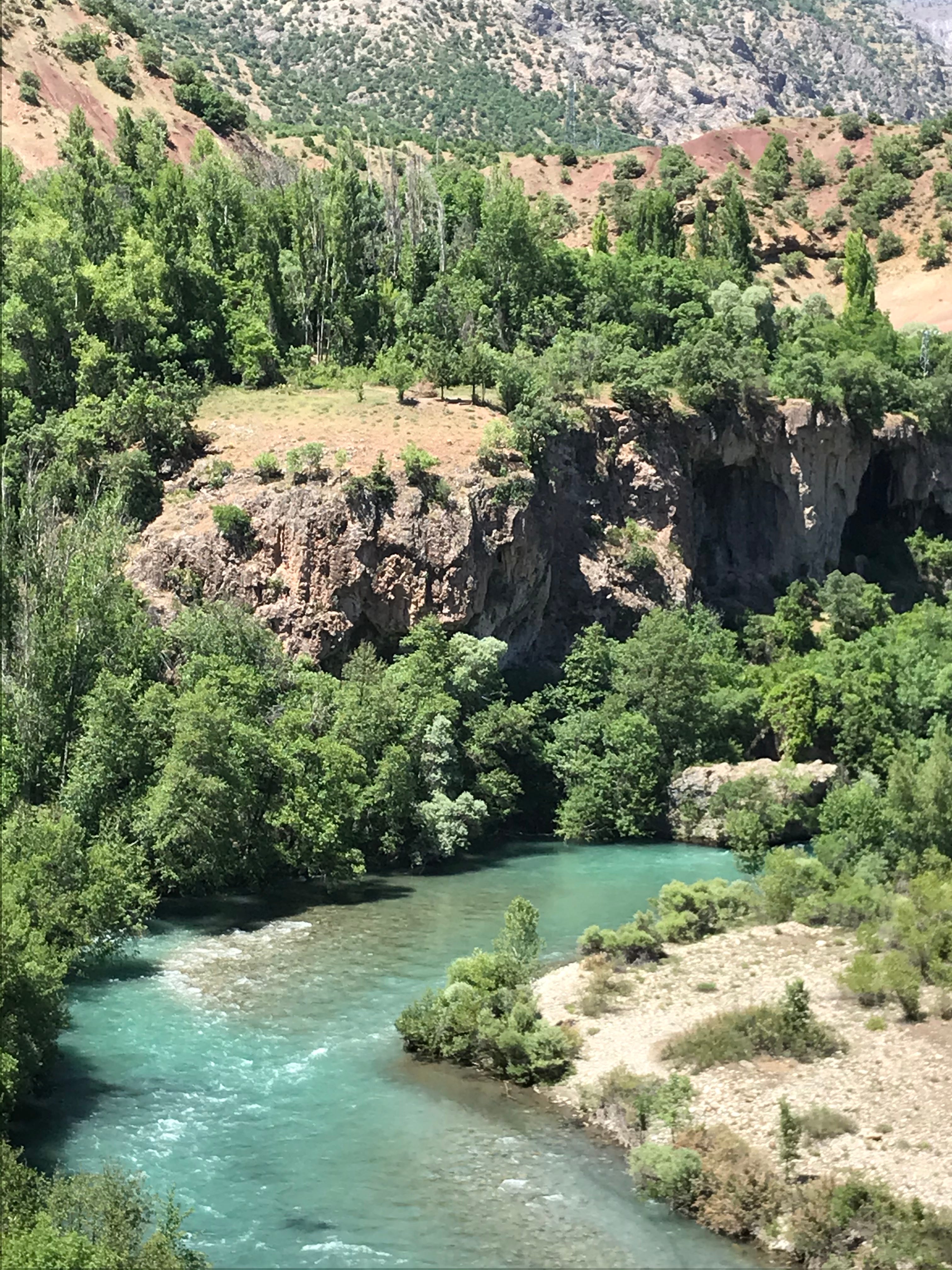
In 1938, the Turkish government informed the elders of a cluster of villages, which were home to Kurdish Alevis, that they were being relocated and moved to a better land. It was not a choice. The people gathered on a particular day and waited for the army to come and escort them. When the military arrived, they began killing the men. The women fled to 38 Kayalıkları and jumped en masse into the great Munzur. Kurdish writer Nuri Dersimi4 recounted that in the purges of 1938, “Thousands of women and girls threw themselves into the Munzur River.” I burst into tears and Metin’s story has never left my side even after all these years. It has taken up residence in my heart and midwifed a poem.
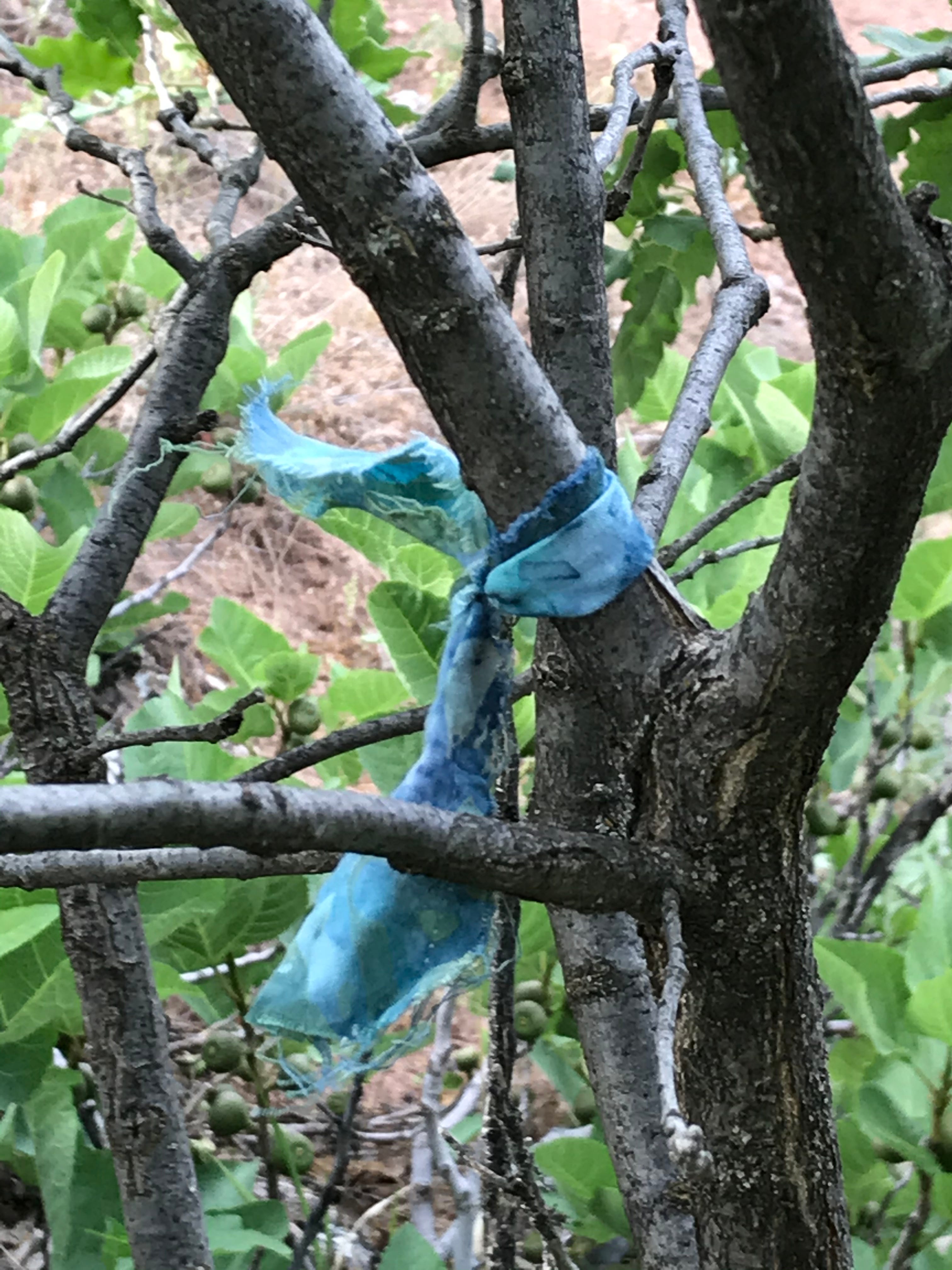
The next day, our friend Buğra (one of the four of us) found a way to access that cliff. We parked below it and walked up a trail that had no historic signage marking the event. No sign of remembrance at all. We followed the trees, bushes, stones, and wildflowers to the top and stood together, looking out over the Munzur. I had brought strips of cloth that I cut from a dress of Grandmother Red Leaf’s, one I inherited when she passed. For years I have shared small strips of this blue cloth with people for ceremonial purposes and on that day, the four of us tied them on the trees and bushes along the cliff … each of us making prayers for the spirits of the women and children who had plunged from that edge and for their men who had died on the land behind us.
I wonder about the very last conversation a mother might have had with her daughter, just before they leapt … before choosing death over probable rape or murder or a life without any sovereignty, including over their bodies. How might the love of a mother be expressed as she stands with her young daughter in such a moment?
A few things to know before reading “The Leap” …
Canım is a Turkish term of endearment that can be used to express affection or closeness. It is similar to saying my dear, darling or sweetheart.
The Munzur River, whose headwaters are in the Dersim area, is highly sacred to the local Kurdish Alevi community. They consider the river and its valley to be a living, holy entity.
Nene is an affectionate name for grandma in Turkish.
Soft crossing is an expression our elder Grandmother Red Leaf used when making prayers for someone’s passing.
Mashallah is a beautiful Arabic word that has made its way into many languages including Turkish and Kurdish. It means what God has willed and is used to express praise, joy or thankfulness.
And so, the poem …
THE LEAP
To a Kurdish Alevi mother and her young daughter in the last few moments of their lives (Dersim, Anatolia, 1938)
Come my daughter
look this way
towards the wild and holy water
the beckoning river
My husband, your papa,
your brothers, my sons
they are clouds now
and they have gone ahead
A dark swarm is coming
a madness of men
hard-handed, closed-hearted
mother forgetters
forsakers of kin
may the stone-cold fruit of their hearts
ripen.
Look up canım, see the sun
We are the freeborn
the soon-to-be newborn
the radiant airborne
unbowed and unbound
we are strong women songs
that sing longer than time
Hear our lament
Our thundering hearts
Fatima, ancestors
Bless us, come closer
You my daughter
have had so few years
but we shall flower
this moment together
You are the sweetheart
of birches and olives,
old oaks and hazelnuts,
hovering kestrels
You are the bride
of the high mountain caverns,
candlelit shrines
and the great rolling Munzur
You are the mother
of sweet yellow buttercups
here at our feet
beside small ochre stones
You are the nene
of this sovereign nation
of brave human people …
soothe us and hold us and bless us please bless us
Sisters stand ready
Mountains stand ready
River stand ready
We offer ourselves
to the field of remembering
all that we have and all that we are
We pray for soft crossing
to some gentler shore
Put your hand in my hand
and we the un-feathered
our hearts in bright flight
will plummet like winged ones
who know their way home
Mashallah! It’s a good day to fly
Come little bird
It is time
This poem is dedicated to …
Metin and Kemal Kahraman, Mavis Güneşer and all the people who touched our hearts in 2021. May you continue to sing the life of this world into abundant beauty through remembrance.
And to the victims of the 1938 purges … men, women and children I will never meet, but will never forget.
May peace be upon us all.
❤️ Debra


From “Palestinian Poetry About Struggle: Stories of Resilience” by Syed Ommer Amer: Words can hold what history tries to hide. For the people of Palestine, poetry has always been a way to protect truth. When voices are silenced, poems remember. They turn loss into record, fear into courage, and despair into faith.
This quote is from the Gaza Poet’s Society website and the voice of Palestinian poet Mohammed Moussa.
The ancestral Kurdish land, commonly called Kurdistan, is a mountainous region in Southwest Asia split across parts of southeastern Turkey, northern Iraq, western Iran, and northeastern Syria.
Nuri Dersimi was a Kurdish Alevi physician and historian who spent almost four decades in exile documenting the Dersim Massacre and preserving the memory of his people through local oral history and survivor testimony.
Both the journey to Dersim and this piece was/is deeply moving as well as heartbreaking. Bearing witness to such suffering transforms one. Engulfed by grief, I could lean into the landscape-Munzur and her exuberant waters, rocks, trees, sky-that where stories of loss and pain were nestled. "The Leap" is a difficult and beautiful poem, thank you Debra for giving voice to those who perished in the bloody pages of history. Heart aches as it should do.
Such beautiful writing dearest Debra - Blessed Be.